Mechanical sound carries information. Engineers have known this for a century. The reason no one turned that information into a standardized number is that every serious attempt hit the same wall.
The conventional approach is comparison. Record a sound, match it against a library of known sounds, flag the deviation. That method produces useful results inside the library, but it cannot scale beyond it. Every new make, every new model year, every new powertrain architecture requires new reference data. The library is always behind the industry it is trying to measure.
AutoSonix did not solve that problem. AutoSonix went around it.
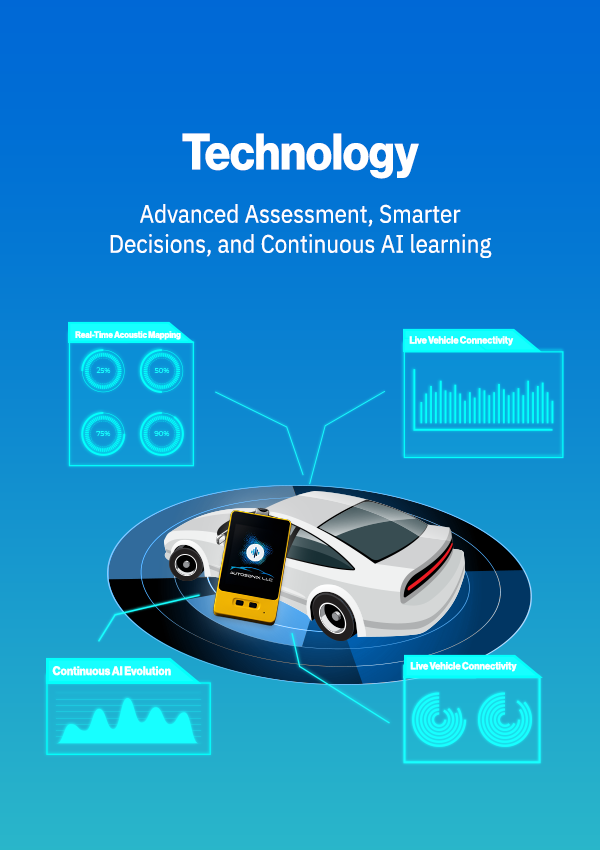
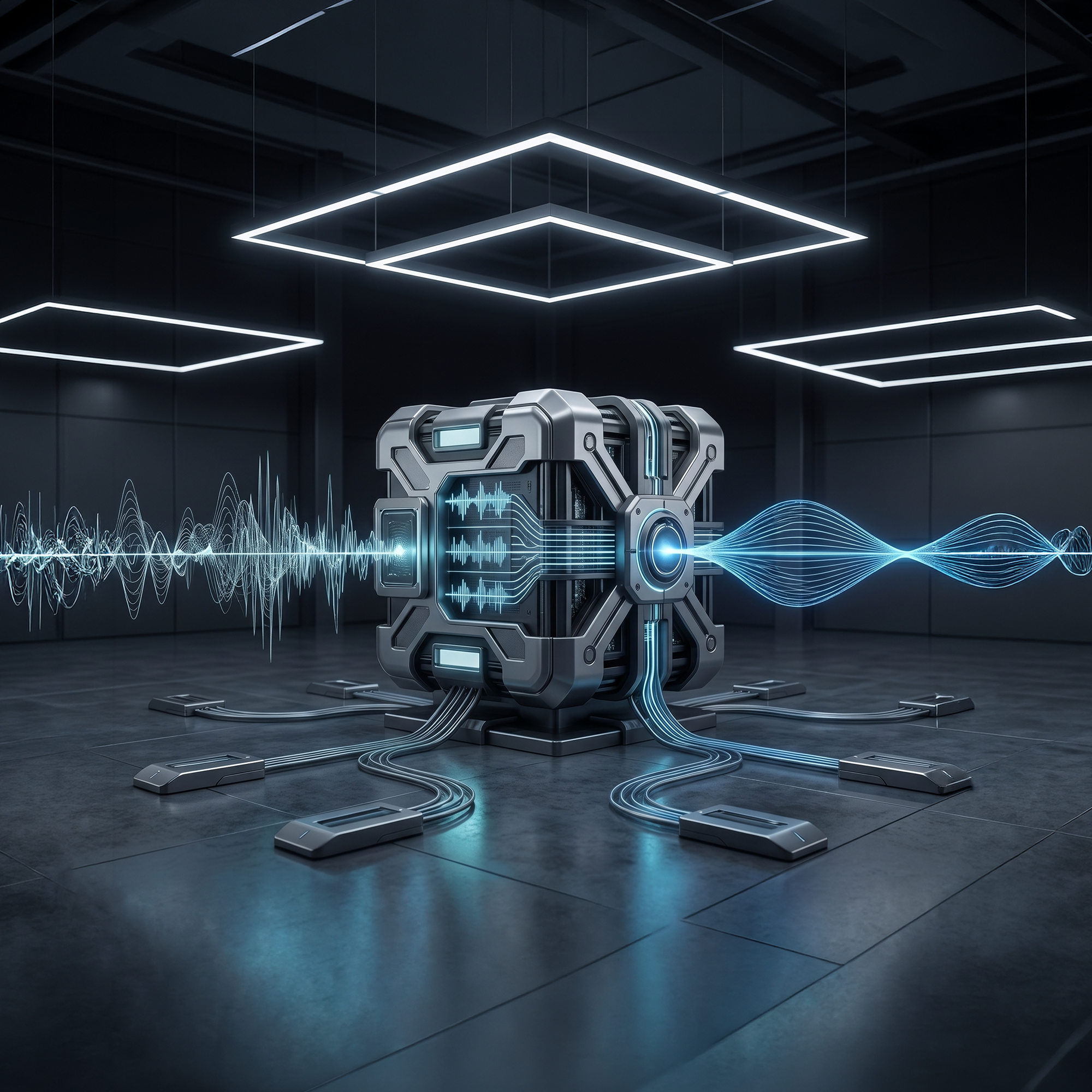
AutoSonix built a measurement technology that produces a standardized acoustic score directly from the signal itself. No reference library. No matched baseline required. No prior recording of that specific make, model, or configuration.
The significance of that is easy to miss because the output looks simple. It is a number. But the path from an acoustic signal to that number, without a database of known sounds to compare against, is the part no one else has delivered. It is the reason PTX™ works on a vehicle it has never encountered before. It is the reason the measurement does not depend on history.
This is the part of AutoSonix that is genuinely novel. This is the technology.
The score is generated from the signal itself, not from a match to something previously recorded. That is why PTX™ works on vehicles the system has never seen before. The measurement does not depend on a reference library, a matched vehicle, or a prior baseline. The methodology produces a consistent output on first contact.
Every acoustic signal AutoSonix collects makes the underlying model more consistent. Not smaller. Not narrower. More consistent across edge cases, new configurations, and platforms the industry has not built yet. The technology does not degrade as the automotive world changes. It compounds.
The architecture is designed to take in external datasets and extend the measurement into domains beyond its original training. New powertrain types, new equipment classes, new operating environments. The methodology travels. The standard is the same regardless of the source.
Signal capture and initial processing happen at the point of intake, without internet dependency and without lag. The technology is engineered to run where the vehicle is, at the speed the operator needs, and to deliver the score before anyone has to wait for it.
The automotive industry has a handful of widely adopted standards. VIN. OBD-II. FICO on the credit side of the transaction. Each one took years to build and decades to become infrastructure. The reason is that standards require a measurement no one else can produce at scale, a methodology that holds up across every participant in the industry, and an output everyone can read the same way. AutoSonix built the mechanical version of that. Sound is now a standardized, repeatable, objective number. The score is the visible output. The technology that produces it is the part the industry has never had.
Vehicle identification. Universal. Decades of infrastructure.
Onboard diagnostics. Mandatory across the industry since 1996.
Credit scoring. One number. Trusted by every lender.
Mechanical sound. Standardized, repeatable, objective. The measurement the industry has never had.
Each standard required a measurement no one else could produce at scale, and an output everyone could read the same way.